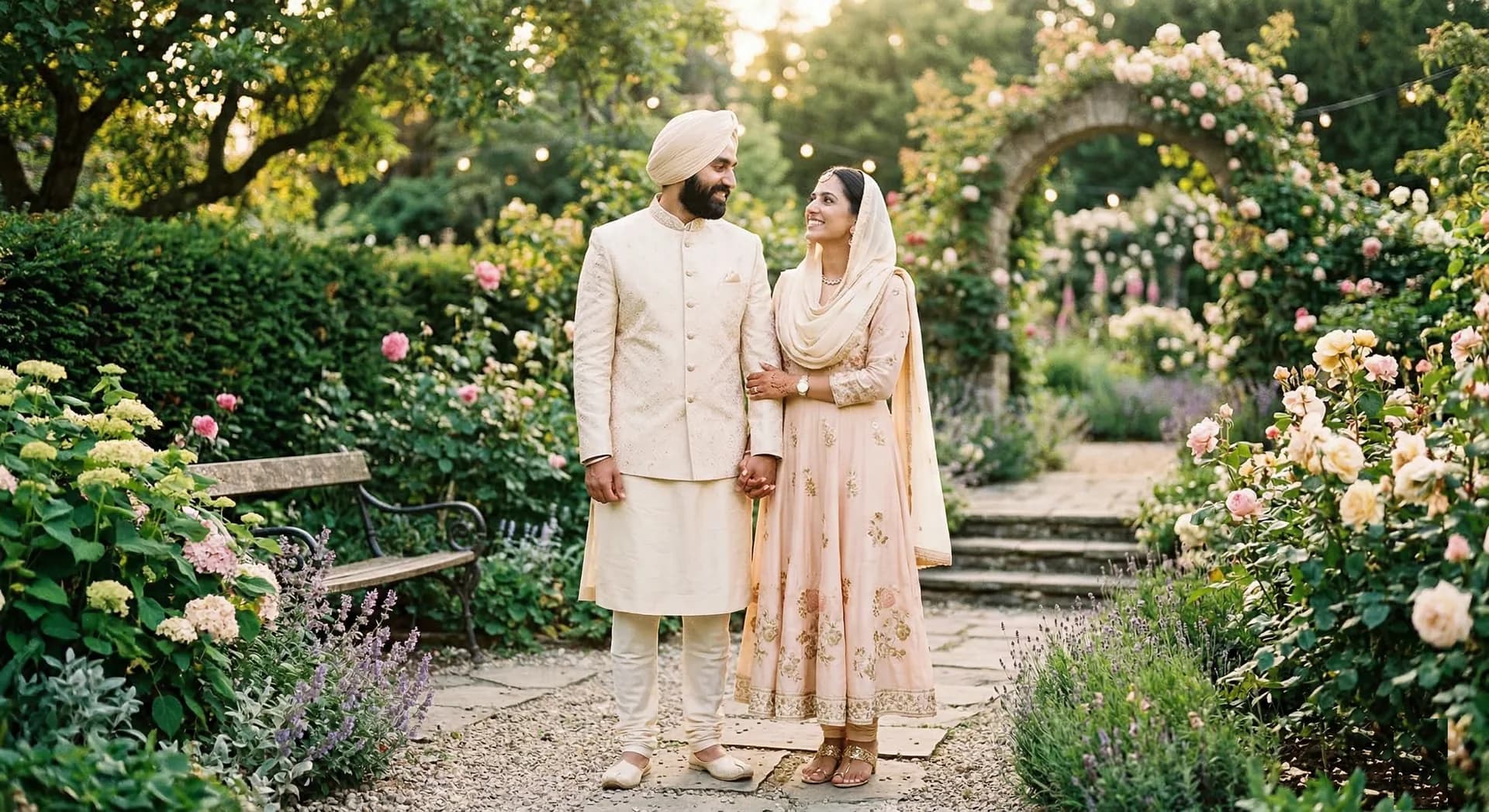
How to do a gotra check, and when to do it
It takes one phone call and ten minutes. It is also the only detail in a rishta that cannot be quietly corrected later, which is why it belongs before the first conversation.
Written by the SaathiSutra matchmaking team in Sri Ganganagar, for Kamboj families across Punjab, Haryana, Rajasthan, the Terai and abroad.
28 articlesLast updated
The SaathiSutra blog covers the practical side of arranging a marriage in the Kamboj, Kamboh and Kamba community: how the 52 and 84 gotra rules are applied, what to ask before agreeing to a rishta, how to write a profile that gets genuine replies, first-meeting etiquette, and the warning signs of matrimonial fraud.

It takes one phone call and ten minutes. It is also the only detail in a rishta that cannot be quietly corrected later, which is why it belongs before the first conversation.
Start here. How a gotra check is actually run and when to run it, what the 52 and 84 lists mean, what to do when a family no longer remembers its gotra, and where the custom and the Hindu Marriage Act part company.

Far more common than families admit — particularly among Terai settler households and third-generation families abroad. There are four reliable ways to recover it, and one thing you must not do.

Two traditional groupings, one community, and a persistent assumption that one ranks above the other. It does not, and treating it as though it does narrows a search for no reason.

Families often assume that clearing the gotra check clears the legal requirement too. It does not — and the statutory rule catches relatives that the gotra rule does not.
Which pool a family is really matching inside: why Abohar and Sri Ganganagar work as one canal-belt corridor, how Terai settler families match along the foothills, when to widen past your own district, and what changes between a farming household and a salaried one.

Three states meet in this corner and the community has never thought in state lines. That has one consequence families keep discovering later than they should.

Pilibhit, Lakhimpur Kheri, Rampur, Rudrapur — Punjabi households three generations into Uttar Pradesh and Uttarakhand, whose rishtas run east and west along the foothills rather than into the states they sit in.

Village-level matching runs out of gotra-compatible families faster than anyone expects. Widening early costs nothing. Widening late costs a year.

Both families say the match is fine, and usually it is. The differences show up in the first year and they are about time and money rhythm, not status.
The conversation itself — what to ask before saying yes, how to make a first family visit go well, and how to decline a rishta or end an engagement without burning the connection.

A clear, quick refusal is a courtesy every family remembers. Silence is the version that gets talked about for years.

In most cases this is not a legal problem. It is a logistical and a social one, and both are handled far better in the first week than the third.

Divorced, widowed, or a marriage annulled — the profile works the same way. State it early and state it plainly, and it stops being the headline.

The conversations that matter most rarely happen at the first meeting. Here is what families should ask early — politely, and directly.

A short, well-planned first meeting tells both families more than weeks of messages. Here is what works.
Writing the profile: what earns a genuine reply rather than a form response, and why mother tongue is not a formality.

Punjabi, Hindi, Haryanvi, Dogri — across the mixed belts these sit side by side in the same district, and the field gets left on its default far too often.

A profile is not a résumé. Small, specific details attract the right families and quietly filter out the wrong ones.
Checking the other side before you commit — fraud warning signs, how to verify a family, what should never go on a public profile, and protecting a spouse who moves abroad.

Verification is not distrust. It is the ordinary diligence families used to do through the village, done differently now that a rishta routinely crosses three states.

Everything published can be screenshotted. Here is the short list of details that should never sit in a profile — and the ones people do not realise are identifying.

Most overseas rishtas go well. The ones that do not follow a recognisable pattern, and almost all of the protection is paperwork done before the wedding rather than after.

Fraudsters follow a predictable script. Once you recognise the pattern, it is easy to stop the conversation before any harm is done.
What the statute and the paperwork require: refusing a dowry demand, registering the marriage and what registration protects, the documents to sort before a date is fixed, and a budget that does not end in debt.

Demanding dowry is a criminal offence in India. Knowing that is the easy part — refusing without wrecking a rishta is what families actually ask us about.

The ceremony makes the marriage. The certificate is what a bank, a passport office and a foreign consulate will ask for — and what a spouse needs if things ever go wrong.

The legal minimum ages, which age proofs are actually accepted, and the papers worth collecting before the wedding rather than during the week after it.

The most useful conversation two families can have, and the one they routinely postpone until the venue is booked and the invitations are printed.
Rishtas across a border: settling the immigration status before anything else, saying early where the couple will live, and weighing a student or work-permit profile honestly.

It is the most asked question in an overseas rishta and the one most often left vague. State the status plainly, and be ready to show it.

In Doaba the default assumption runs one way, and in the UAE it runs another. One clear sentence in the profile saves both families a conversation that ends in disappointment.

A large share of overseas profiles are not settled yet. That is not a reason to refuse — it is a reason to ask a different set of questions, and to be careful about one specific trap.
Where custom meets the decision — what gotra and community actually settle between two people, and what to do when the two families disagree about kundli matching.

One side takes it seriously and the other does not follow it at all. That is a conversation for the first week, not the fourth.

Traditional filters exist for good reasons. Knowing what each one is really for helps families use them without narrowing the search to nothing.
There are 28 articles, grouped into 8 sections: Gotra, Community & regions, Rishta advice, Profile tips, Safety, Law & money, NRI rishtas, Traditions. They are written for Kamboj, Kamboh and Kamba families arranging a marriage — how the 52 and 84 gotra rules are applied, why neighbouring districts across three states work as one rishta pool, and what to settle before an NRI rishta goes further. General wedding content is deliberately not published here.
Every article carries a byline that links to the writer’s bio on the About page. Articles in the company’s collective voice are credited to The SaathiSutra Team — the people who verify profiles, take the support calls from families and handle the fraud reports members send in — and are reviewed by the founder, Amar Kamboj Dhot, before publishing. Nothing on this blog is published anonymously.
13 of the 28 articles cite their sources, and they cite primary ones — the Act itself or the government portal itself, never a news summary of one. The remaining 15 rest on the matchmaking team’s own work with families in these districts, and each of them says so in a note at the foot of the article rather than attaching official-looking links it does not rest on.
Every article is free and none of them needs an account or a subscription. New posts go out on the RSS feed at /blog/rss.xml, which most feed readers will find on their own from this page.