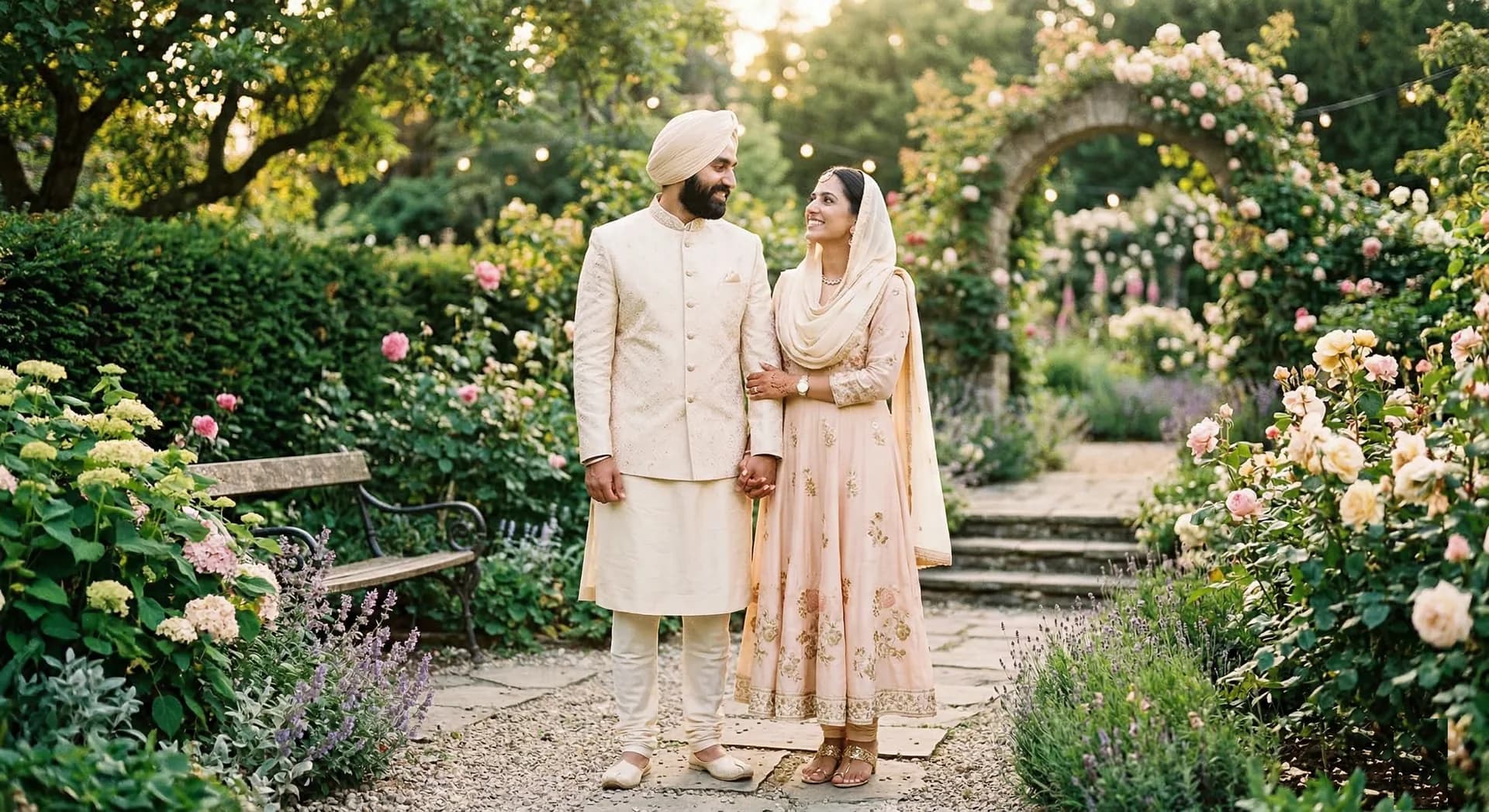
Village-level matching runs out of gotra-compatible families faster than anyone expects. Widening early costs nothing. Widening late costs a year.
Most families start close to home, which is sensible: a match nearby means a daughter can visit without it being an expedition, and both households can check each other through people they already know. The mistake is treating "close to home" as a filter to be exhausted before anything else is tried.
Why the local pool is smaller than it looks
Two things shrink it at once. The gotra rule removes a large share of the families around you — and in belts where the community has been inter-marrying for generations, it removes more than you would guess. Then the maternal-side check removes more.
In districts where village-level matching is still common — Sri Muktsar Sahib, much of the canal belt, the Terai villages — families routinely find that the genuinely eligible list within an hour’s drive is a handful of households, most of whom are already talking to somebody. That is not bad luck. It is arithmetic, and it does not improve by waiting.
Corridors, not radii
Widening is not a circle drawn on a map. The community moves along established corridors, and the sensible next step is the corridor rather than the nearest unfamiliar district.
A Ludhiana search widens naturally to Jalandhar, Patiala, Mohali and Bathinda. Sirsa runs to Hisar, Sri Ganganagar, Hanumangarh and Bathinda. Hoshiarpur runs to Jalandhar, Kapurthala and the tricity — and then overseas, because that is where that district’s families actually are. Ambala reaches into Patiala and Chandigarh as easily as into Karnal. Follow the corridor and the households at the other end will be recognisable; jump at random and they will not. There is a page for each of these districts on this site, grouped by state, which is a quicker way to read a corridor than a map is.
The two-hour rule, and what it really costs
A lot of families set an unspoken limit of about two hours, so a daughter can come home for a day. It is a reasonable preference and we would not argue with it — but it should be a stated preference rather than an assumption, because it is expensive. Going from two hours to four usually brings in several more districts, and in the corridors described above those are the districts the community already matches into.
If your side is genuinely open to more distance, say so in the profile. It widens the search immediately, and it saves the other family from ruling themselves out.
A staged plan that works
- Weeks 1–2: your district and the two or three towns your family already matches into.
- Weeks 3–6: the full corridor — usually four to six districts, crossing state lines where the community does.
- From week 6: the state, plus the corridor’s far end. This is the point at which most families find the match they take forward.
- Overseas, if and only if your side has genuinely decided the couple may live abroad. That is a different decision, not a wider radius, and it deserves its own conversation.
What to relax, and what not to
Widen on geography, height, salary band and the exact degree. Hold firm on gotra, marital status and anything you would genuinely refuse over — diet and household language among them, since those decide daily life more reliably than distance does.
In our experience the families who widen on geography early, and hold the rest steady, get further in a shorter time — and they do it without conceding anything they actually care about.
Where to widen to
Widening is only useful if you widen along a corridor the community actually matches through, rather than drawing a larger circle on a map. The two pages below are the corridors themselves; the directory has the rest, grouped by state so the next district along is easy to find.
- From the Punjab–Rajasthan border districts, the belt runs through Abohar, Fazilka, Sri Ganganagar and Hanumangarh — the canal-belt article is about why that line is not a boundary.
- From the Terai, it runs along the foothills rather than into the surrounding states — see Terai settler families.
- Sri Muktsar Sahib is the district where a village-level search runs out fastest, and its page says so plainly — brides or grooms.
Where this comes from
This article carries no external sources. It rests on the SaathiSutra matchmaking team’s own work with families in these districts. Where an article turns on a statute or a government portal we cite it; where the advice comes from experience we say so rather than attaching official-looking links it does not rest on.
Our team answers every message. Reach out and we will sort it out.