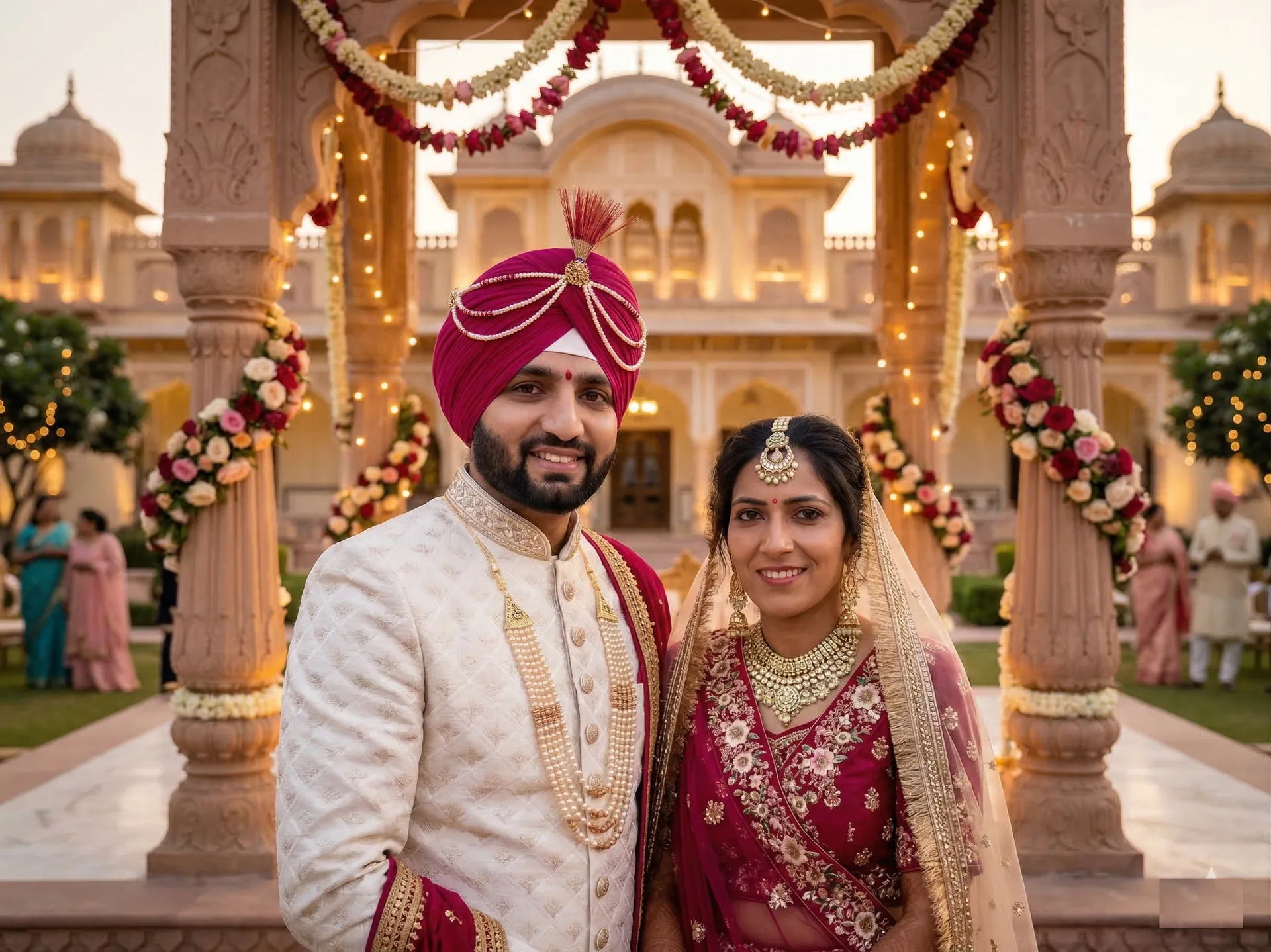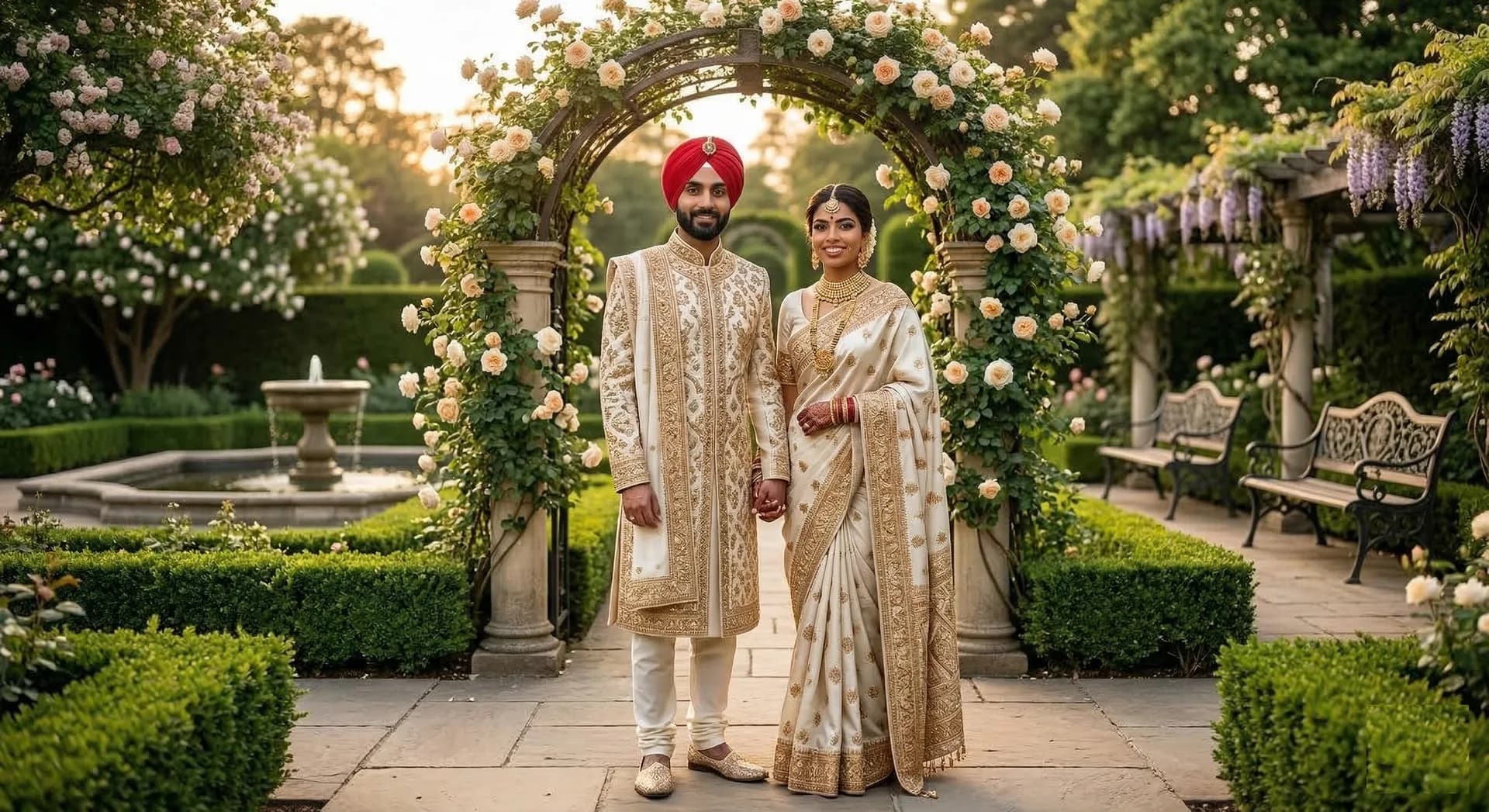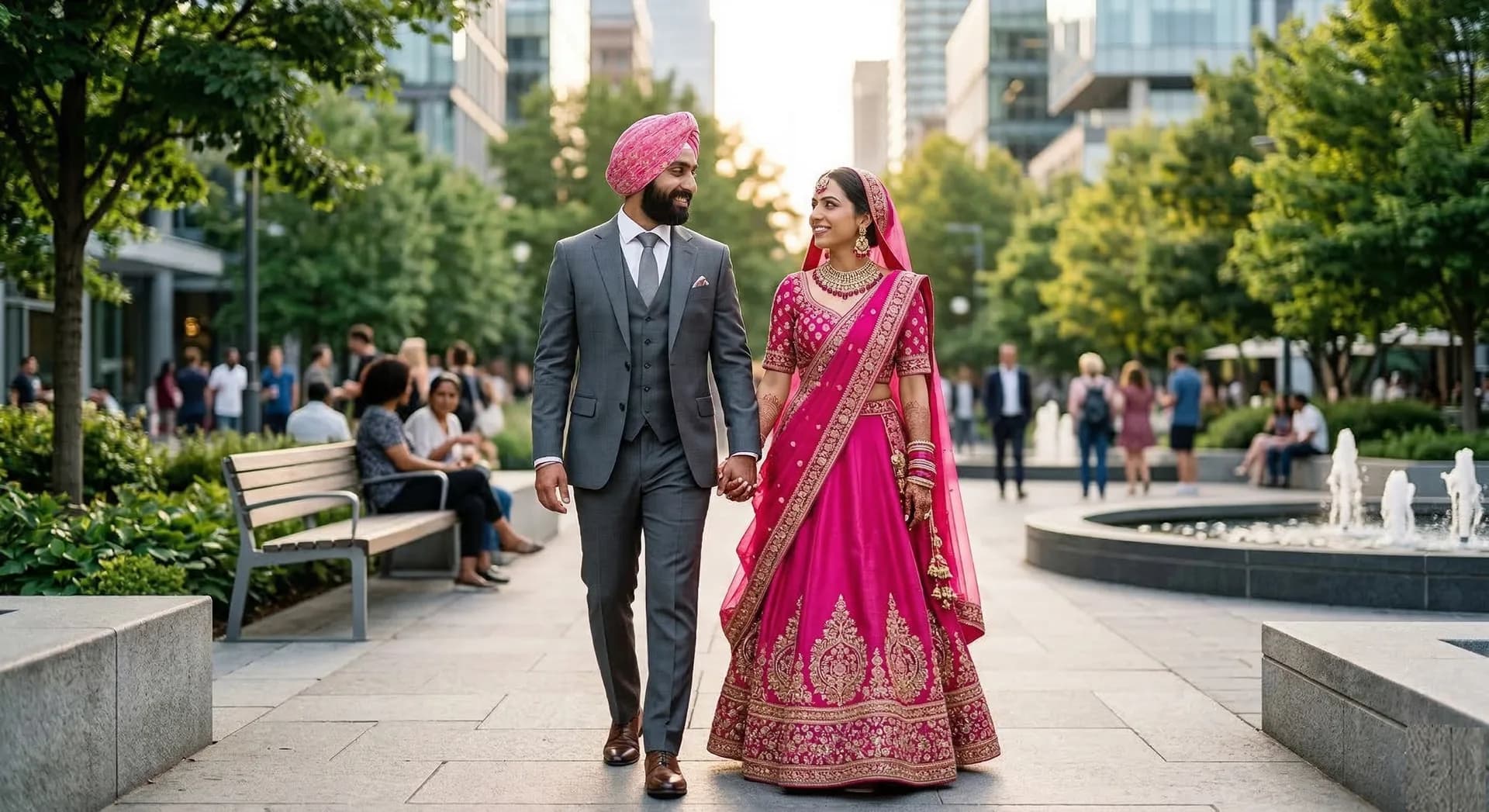
One family goes to the gurdwara, the other calls the pandit, and both are Kamboj. Which ceremony, or both, who decides, what the gurdwara will ask, and the food-and-drink questions that cause more trouble than the ritual.
Among Kamboj families in Fazilka, Sri Ganganagar or Yamunanagar, the question of whether a household is Sikh or Hindu does not always have a one-word answer. Plenty of households have both in them: a grandfather who kept his hair and a son who did not, one brother’s family that goes to the gurdwara and another that keeps a pandit, Hindu families who matha tek at the gurdwara every Sunday and Sikh families who light diyas at Diwali in the same way as their neighbours. Gotra, village and biradari tie these families together far more than the place of worship divides them, and rishtas across the line are an ordinary part of community life.
That ordinariness is also the trap. Because nobody thinks of it as a mixed marriage, nobody sits down to talk about the ceremony, the food or the household until a date is being fixed, and by then two sets of assumptions have hardened. This article is about the questions to settle, in what order, and who should settle them. It describes what usually happens and what the Sikh code and the law actually say, and it does not tell anyone which practice is right.
Which ceremony: the four usual answers
The ceremony question comes first, because everything else, from the gurdwara booking to the time of the baraat, follows from it. In practice families settle on one of four arrangements:
- An Anand Karaj only. The couple are married at the gurdwara in the morning, and the rest of the day follows the shape of a Sikh wedding. This is common when the bride’s family is Sikh, and also when a Hindu family is comfortable in the gurdwara and has no strong attachment to the pheras.
- Pheras only. The couple are married at a mandap with a pandit, usually in the evening or at night, and the day follows the shape of a Hindu wedding. Common when the bride’s family is Hindu and the Sikh family does not hold strictly to the Anand Karaj.
- Both, on the same day. An Anand Karaj in the morning at the gurdwara and pheras in the evening at the venue. It makes for a long day and two sets of arrangements, and it needs the gurdwara committee’s agreement, discussed below.
- Both, on different days. Families who want both ceremonies to have their own time, or who live in different towns, sometimes hold them on consecutive days or hold one at each family’s place.
Who decides
The customary starting point in Punjabi weddings is that the bride’s family hosts the wedding: the baraat comes to them, they arrange the ceremony, and their practice sets the main rite. Many cross-tradition rishtas settle the question that way without anyone needing to say so.
It is only a starting point. Three other voices matter, and a decision that ignores any of them tends to resurface later:
- The couple. They are the ones being married, and in many families today their preference counts for more than it did a generation ago. Ask them separately, before the parents have agreed something between themselves.
- The household the bride will live in. If she is moving into a Sikh household with an amritdhari mother-in-law, or a Hindu household where the family deity is worshipped every morning, the ceremony is the first sign of how that household will receive her. It is better to talk about it at the ceremony stage than at the first festival.
- The gurdwara committee. If an Anand Karaj is part of the plan, the committee’s conditions decide whether it can go ahead as the families intend. This is the one voice the families cannot overrule, and it should be consulted before the families announce anything.
What the Sikh code says, and what the gurdwara will ask
The Sikh Rehat Maryada, the code of conduct published by the Shiromani Gurdwara Parbandhak Committee, deals with marriage in Article XVIII. Three of its provisions bear directly on a Sikh–Hindu rishta.
- A Sikh’s marriage should be solemnised by Anand marriage rites, and the code says a Sikh’s daughter must be married to a Sikh.
- Persons professing faiths other than the Sikh faith cannot be joined in wedlock by the Anand Karaj ceremony.
- Among the practices the code calls sacrileges at a Sikh wedding are performing havans and installing a vedi, the canopy under which a Hindu marriage is performed, along with the sehra, the red thread on the wrist, and drinking liquor.
How committees apply it
The code is the reference; each gurdwara committee applies it, and they do not all apply it in the same way. When a Hindu Kamboj groom is to be married by Anand Karaj to a Sikh bride, or the other way round, these are the things committees commonly ask about:
- Whether both bride and groom are Sikh. Some committees ask that both names carry Singh and Kaur, some ask that the groom wear a turban for the ceremony, some ask for a written declaration, and some ask more. Ask the gurdwara you will actually use, and do not rely on what a cousin was told at another gurdwara years ago.
- Whether a Hindu ceremony is also planned. Because of the clause on havans and the vedi, some committees will ask directly, and some will decline the Anand Karaj if pheras are to follow on the same day. Others take a more accommodating view. You need to know which kind of committee you are dealing with.
- Conduct on the day. Heads covered, no alcohol or tobacco anywhere near the gurdwara, and in some places the sehra removed before the couple sit before the Guru Granth Sahib.
The one piece of advice we would give without qualification is to be truthful with the committee. Families sometimes try to get an Anand Karaj through by leaving out the evening pheras or presenting the groom as something he is not, and it goes badly when it comes out, sometimes on the morning itself, in front of both families. If the gurdwara will not conduct an Anand Karaj on your terms, you are better off knowing it two months before the date, when there is still time to choose a different gurdwara, a different arrangement, or a single Hindu ceremony. The full sequence of the Sikh ceremony, and what else to agree with the committee, is in the Anand Karaj, explained for families.
If you hold both ceremonies
Families who settle on both should plan them as two ceremonies with their own needs, not as one wedding with an extra item. The Anand Karaj is a morning rite on the gurdwara’s schedule; the pheras usually follow the pandit’s muhurat, which can fall late at night. Between the two there is the milni, the meals, the change of clothes and the travel, and a bride who has been awake since before dawn.
- Tell both officiants. The granthi should know about the evening and the pandit about the morning, and neither should hear about the other from a guest.
- Keep the two clearly apart. Do not install a mandap or light a fire in the gurdwara, and do not ask the pandit to perform part of his rite on the gurdwara premises.
- Decide which side’s elders lead the milni and the reception of the baraat, which normally happens once, before the first ceremony. The details are in the article on the baraat and the milni.
- Do not double the gifts out of politeness. Agree between the two mothers what is given once and where, rather than repeating shagun at both ceremonies because nobody wanted to be the one to stop.
- Read the pheras in a Hindu Kamboj wedding for the evening, and in particular the part about not shortening the seven steps when the day is running late.
Turbans
Turbans come up in three places, and only one of them is usually difficult.
At the gurdwara, everyone covers their head. Hindu men from the groom’s or the bride’s side who do not wear a turban will need a patka or a large handkerchief, and it helps to have a basket of them at the gate so nobody is embarrassed at the door of the darbar hall.
At the milni and the wedding, many Hindu Punjabi grooms wear a safa or a pagri as a matter of custom, and many of the elder men on both sides tie one for the day. That is rarely contested.
The difficult case is when the committee, or the Sikh family, expects a Hindu groom to wear a turban for the Anand Karaj, or expects more than that. The code states that a Sikh must wear a turban and that a Sikh woman may or may not tie one, and for some families the turban is not a costume for the day but a sign of who the groom is. Ask the question plainly and early, and let the groom answer it himself. A young man who agrees in the excitement of the roka to something he does not intend to keep is storing up a problem for his marriage, not just for the wedding.
Meat, alcohol and who eats what
Food and drink touch every function and every guest, which is why they often cause more friction at a cross-tradition wedding than the ceremony does.
The Sikh code tells Sikhs not to take intoxicants of any kind, and lists drinking liquor among the things it calls sacrileges at a wedding. In practice Sikh households range widely, from amritdhari families who will not attend a function with a bar to families whose evening reception is known for one. Hindu households range just as widely, from families who are strictly vegetarian, and stricter still on the days of the wedding and the pheras, to families who serve meat and drink at every function.
So the question is not which tradition is right. It is what each function will serve, decided function by function, and agreed between the two families before the cards go out:
- Anything at the gurdwara is vegetarian and dry, without exception. That is not negotiable and nobody should try.
- The days of the pheras and the Anand Karaj. Many families on both sides keep these vegetarian and alcohol-free even if their reception is not. Ask the other family directly.
- The mehndi, the sangeet and the reception. The host family normally decides, but it should tell the other side what it has decided, especially if elders on that side would not attend a function with alcohol or meat.
- Guests with particular needs. Relatives who have taken amrit and strictly vegetarian elders may want to know how the food is prepared and whether a separate counter is kept. A quiet word to them beforehand is better than a public refusal at the table.
After the wedding: the household
The ceremony is one day. The questions that matter more are about the household the couple will make, and they are easier to raise before the rishta is fixed than after. They include which festivals the household keeps and how, whether a gurdwara or a temple or both will be the family’s place of worship, and whether the children will carry Singh and Kaur in their names.
Where one partner is amritdhari the questions go further. The code says that a Sikh should not cut a child’s hair, and that a baptised Sikh ought to have his wife baptised. Not every amritdhari family expects the second, and many would never press it. But if it is an expectation in the family, the other family should hear it at the start, from the family itself, not from a relative after the wedding.
None of this needs to be solved before the roka. It needs to be said. Two families who have heard each other’s answers can make a decision; two families who assumed can only be disappointed. The questions to ask before saying yes are a useful list to work through alongside these.
Families abroad
For Kamboj families in Canada, the UK, the USA or Australia the same questions arise with two additions. Gurdwara committees abroad set their own conditions for an Anand Karaj, and a family should ask the gurdwara it will actually use rather than the one a relative used in another city. And the religious ceremony, whether Anand Karaj or pheras, is not always the legal marriage in that country: a licence or a civil registration may be required before or after it, under local law.
Where one family is in India and the other abroad, the ceremony questions are often settled by telephone between people who have never met, which makes it more important, not less, to say each position plainly. The NRI Kamboj matrimony page covers the other questions an overseas rishta raises.
Registering the marriage
The law is more straightforward here than families fear. The Hindu Marriage Act, 1955 applies to Sikhs as well as to Hindus, so a marriage between a Sikh and a Hindu falls within it, and no separate civil marriage is needed for the rishta to be legally recognised. The Act recognises the customary rites and ceremonies of either party, and where those include the saptapadi, the marriage is complete on the seventh step. Section 8 provides for registration under rules made by the state.
Where the couple were married by Anand Karaj, the Anand Marriage Act, 1909 applies as well. Section 6, added in 2012, requires each state to make rules for registering Anand marriages, and Punjab made its rules in 2016. Registration under that Act is not required for validity, but it is proof, and a couple registered under it need not register again under any other law.
For a couple who have had both ceremonies, the practical rule is simple: register once, under one Act, and describe the ceremony accurately. Ask the registrar’s office which route it expects for your case, and take the gurdwara’s certificate, the photographs and the invitation card with you. Do it within the first month, while both of you and your witnesses are in the same place. The article on registering your marriage explains why it matters.
How to raise it, and when
The time to raise the ceremony is before the roka, at the stage when the families are still deciding whether to go ahead. Once a roka has been held, a disagreement about the Anand Karaj or the pheras is no longer a question about the wedding but about whether the families meant what they agreed. The article on the roka and sagai sets out what each of those steps commits the families to.
Raise it the way you would raise the gotra or the kundli, as a plain question at an early meeting, and say your own position first. A few sentences that do it:
- “We are a Sikh family and we would want an Anand Karaj. What would your family want?”
- “We would like pheras with our pandit. If your side would also like an Anand Karaj, we are happy to talk about doing both.”
- “Our functions are vegetarian and we do not serve drink. We wanted to say so now rather than later.”
- “Our son has said he would not wear a turban. We wanted you to hear that from us at the beginning.”
Say it through whichever channel the rishta came by. If a relative or a family friend brought the proposal, they are often the best person to carry the first question across and to bring back an honest answer. If the answers show that the two families want things that cannot both happen, that is not a failure; it is the information you needed. There is an article on how to say no to a rishta without damaging the connection.
The families for whom these weddings go well are usually the ones who talked early and agreed on what mattered to each side. Families still looking for a match can register free on SaathiSutra’s Kamboj matrimony service, where the gotra is chosen from the 84 and 52 lists and search marks any profile that shares yours. Whether a family is Sikh or Hindu is a conversation for the families themselves, and the sooner it happens the easier it is.
Sources
- Sikh Rehat Maryada (English version: The Code of Sikh Conduct and Conventions), Section Four, Chapter X, Article XVI and Chapter XI, Article XVIII: Anand Sanskar — Dharam Parchar Committee, Shiromani Gurdwara Parbandhak Committee, Sri Amritsar
Article XVIII: Sikh marriage by Anand rites, the clause that persons of other faiths cannot be married by Anand Karaj, the practices called sacrileges at a wedding (havans, the vedi, the sehra, liquor), and the provision on a baptised Sikh’s wife. Article XVI: the turban, intoxicants and children’s hair.
- Hindu Marriage Act, 1955, sections 2, 7 and 8 — Government of India
Section 2 applies the Act to Sikhs as well as Hindus. Section 7 recognises the customary rites of either party and makes a marriage with the saptapadi complete on the seventh step. Section 8 provides for registration under state rules.
- Anand Marriage Act, 1909, as amended by the Anand Marriage (Amendment) Act, 2012 — Government of India
Section 6, inserted in 2012: state rules for registering Anand Karaj marriages, validity not dependent on registration, and no duplicate registration under another law once registered under the Act.
Our team answers every message. Reach out and we will sort it out.