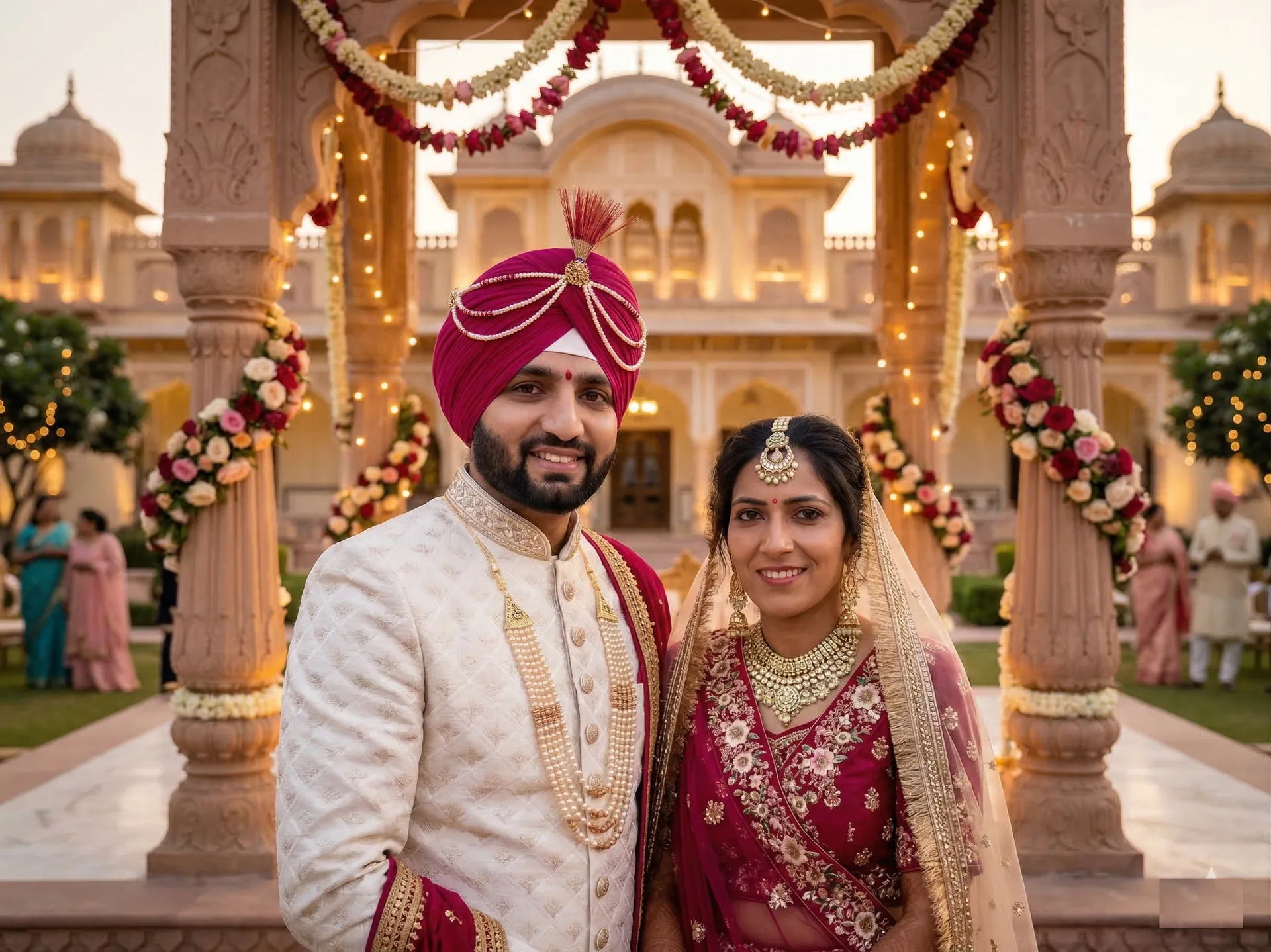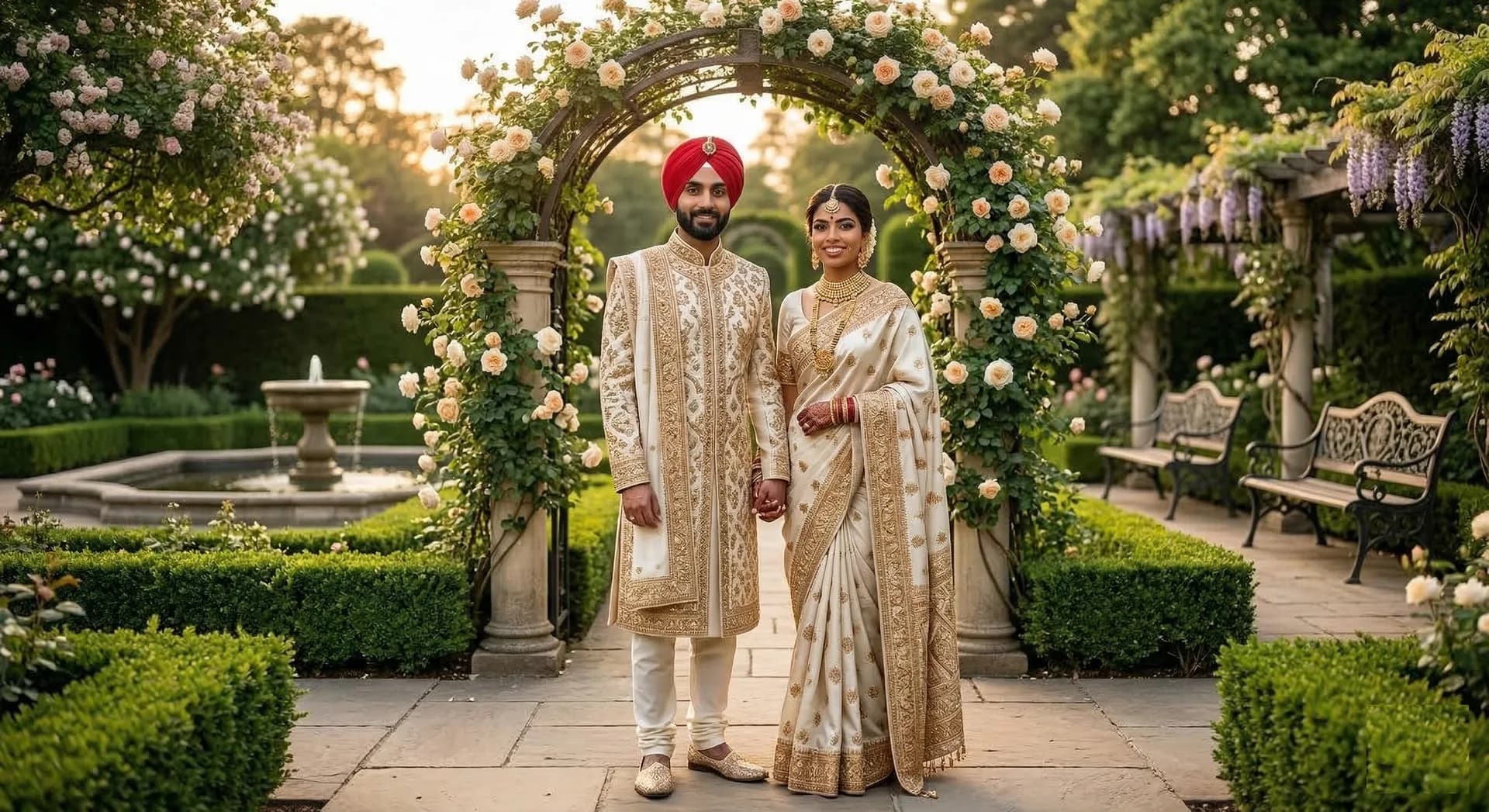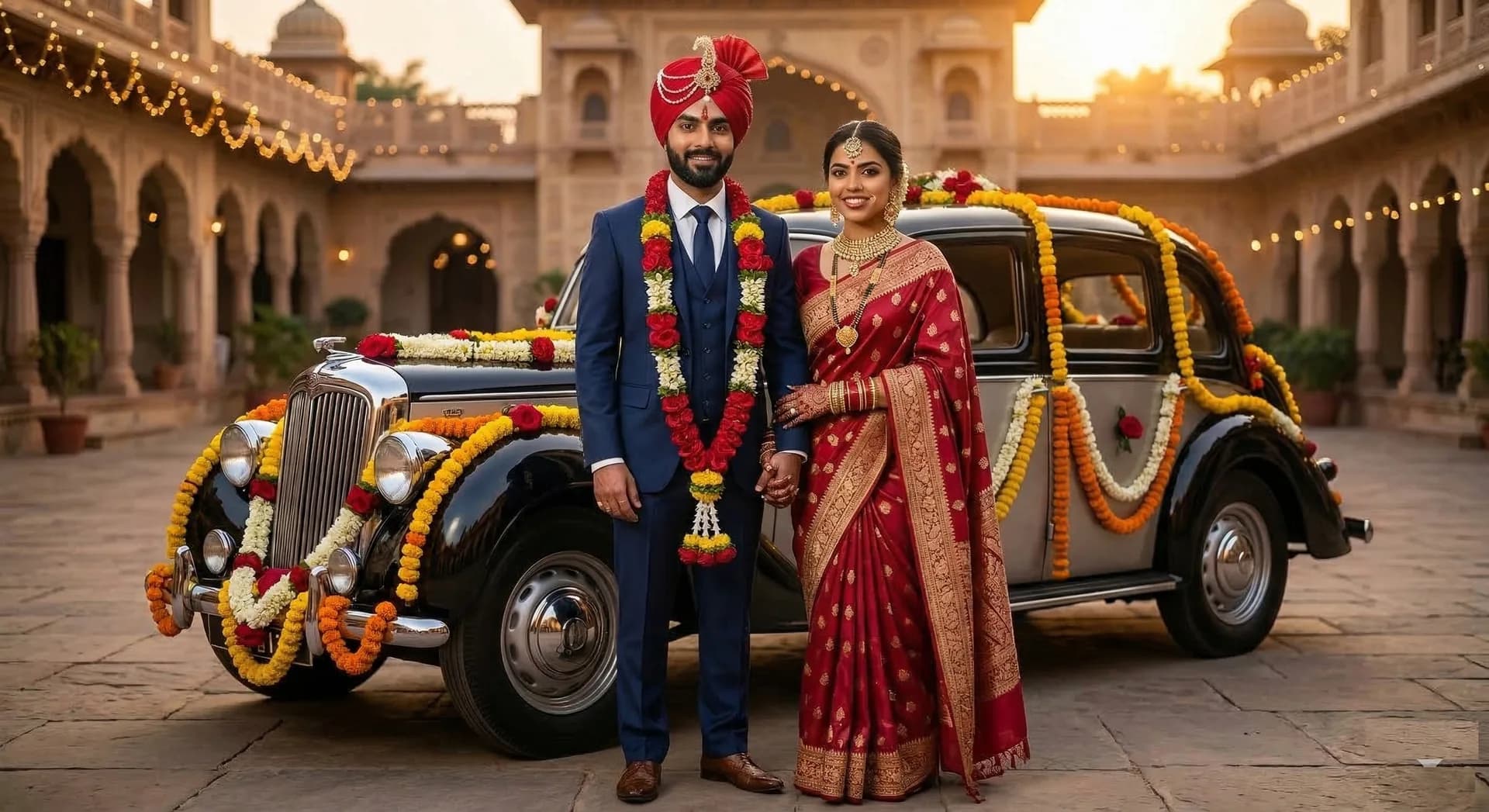
The doli is the hardest hour of the wedding for the bride’s family, and the pani varna is the first thing the groom’s family does as hers. What happens at each, and in the days that follow.
Every wedding has a moment when the celebration stops being about the couple and becomes about the two families. For the bride’s family it is the doli: the hour when the daughter they raised walks out of their care and into a car that will take her to another house. For the groom’s family it is the pani varna, at their own door, when the groom’s mother receives the new daughter-in-law and the house formally becomes hers too.
Between them sit a handful of small customs, and a few days later the return visit to the bride’s family, often called phera pauna in Punjabi homes and pag phera in Hindi-speaking ones. None of it is complicated. All of it goes better when somebody on each side has thought it through, because these are the hours when people are tired, emotional and inclined to assume the other family does things their way.
This article walks through each part as Punjabi Sikh and Hindu households commonly keep it, and says where families differ. Practice varies by family, by district and by generation, and nothing below is a rule every Kamboj family follows. If you want the whole wedding in order first, start with the step-by-step overview of the rituals.
When the doli happens
The doli follows the ceremony, so its timing depends on which ceremony the family held. In a Sikh wedding the Anand Karaj is usually held in the morning, there is a meal afterwards, and the doli leaves in the afternoon or early evening. In a Hindu wedding the pheras are often held in the evening at the hour the pandit has fixed, they can run late into the night, and the doli may not leave until the small hours or the next morning.
That difference matters for planning. An afternoon doli arrives in daylight with guests still around; a doli at four in the morning means a tired drive and a quiet house at the other end. Neither is wrong. The families should simply know which one they are planning for.
The word itself comes from the palanquin that once carried a bride from her parents’ home, borne by men of the family. Hardly anybody uses a palanquin now. The doli today is almost always a decorated car, and the name has stayed with the farewell rather than the vehicle.
What happens at the doli, step by step
The exact order changes from house to house, but the shape is recognisable across Punjab, Haryana and the families who have settled further afield.
- The bride gets ready to leave. In some families she changes into an outfit sent by the groom’s side for the purpose, often given at the chunni ceremony or with the wedding clothes; in others she leaves in what she wore for the ceremony. Ask in advance which the groom’s family expects, so nobody is searching for a suitcase at the last minute.
- The elders bless the couple. Parents, grandparents, uncles and aunts on the bride’s side come forward, usually in order of age, to put a hand on the couple’s heads and give shagun. This is the part that takes longest and the part most worth not rushing.
- The phulkari or chunni, where the family keeps it. In many Punjabi families the bride’s brothers or male cousins hold a phulkari or a large chunni over her like a canopy as she walks. Most families do this as she is brought to the ceremony; some do it again as she walks out to the car. Who holds it varies: in some households it is the brothers, in others the women of the family. If there are no brothers, cousins do it, and nobody should make that an occasion for comment.
- The rice over the shoulder, where the family does it. Just before she leaves, the bride takes a handful of rice or puffed rice and throws it backwards over her head, towards the house she is leaving, without looking back. It is widely understood as her wish that her parents’ home stays full and prosperous after she has gone. In some families her mother or another woman stands behind her and catches some of it in her chunni or her open hands. Plenty of Sikh families do not do this at all, and plenty of Hindu families do it with more ceremony than described here; it is a household custom, not part of either religious rite.
- Her brothers lead her to the car. The bride’s brothers or male cousins walk her to the groom and to the car. In many families they give the car a push as it moves off, the modern echo of carrying the palanquin.
- Coins are scattered as the car leaves. In many families coins are thrown in the wake of the doli, and the children of the neighbourhood run to collect them. Who throws them differs from family to family.
The emotions, and how families handle them
The doli is traditionally a sad moment, and families should not be embarrassed that it is. The women of the house may sing the farewell songs their own mothers sang; fathers who have been calm through every ceremony often are not calm now. Brothers who joked all week go quiet. Some brides cry from the moment the elders start the blessings; others are dry-eyed and then cry in the car an hour later. Neither says anything about how she feels about the marriage.
Where the bride already lives away from home for work or study, the doli is often warm and teary rather than wrenching. That is not a lack of feeling; the family has already done some of its parting. Let each family have the doli it actually feels, and do not let relatives compare it with someone else’s.
A few practical habits make the hour easier for everybody:
- Give the bride a private few minutes with her parents before the public farewell. A closed door and five minutes is enough. The public goodbye is then easier to get through, because the real one has already happened.
- Name one person on the bride’s side to keep time. The groom’s family will want to leave at some point, and it is far kinder for the bride’s own cousin to say "ten more minutes" than for the groom’s uncle to say it.
- The groom’s side should not hurry it. If the drive is long and the hour late, settle the departure time with the bride’s family that morning, and then hold to it gently. Standing at the car checking watches is remembered for years.
- Decide who travels with her. Some families send a young cousin or a sister-in-law along in the car so the bride is not arriving alone among new faces; others do not. Either is fine, but agree it beforehand, because a seat in the car is not something to negotiate at the kerb.
- Look after the parents afterwards. The bride’s house can feel very empty that evening. A sibling or an aunt staying on, a meal together, a phone call from the bride once she has arrived: small things, and they matter.
When the bride is moving abroad
Many Kamboj weddings now have one spouse settled in Canada, Australia, the UK or elsewhere, and in a good number the bride will follow her husband abroad within months. The doli then carries a second, longer farewell inside it. Families handle that differently: some keep the doli exactly as it would be for a bride moving to the next district, and say the larger goodbye at the airport later; others find the doli itself is where it all comes out.
Either way, the weeks between the wedding and the move are not just an emotional stretch. They are when the paperwork that protects her has to be done, starting with registering the marriage while both spouses are still in India. The practical list, from the documents she keeps in her own hands to who her family should be able to reach abroad, is in the article on protecting the spouse who moves abroad, and it is worth reading before the wedding rather than after. Families looking at overseas rishtas will also find each country’s community described in the NRI Kamboj matrimony guides.
If the groom is flying back soon after the wedding, plan the first days and the return visit around his ticket. A phera pauna squeezed into the morning of his flight helps nobody.
Pani varna: the welcome at the groom’s door
While the doli is leaving one house, the other house is getting ready. Traditionally the groom’s mother does not travel back with the doli, or leaves earlier, so that she is at home to receive the couple. The car pulls up, the dhol starts again if there is one, and the couple are stopped at the threshold before they step in.
What follows is the pani varna, also spelt paani vaarna, and in some sources called pani bharna. The groom’s mother holds a vessel of water, a glass, a small lota or a brass or steel gadvi depending on the house, and circles it over the heads of the couple. In some families it is circled over the bride alone. The number of circles differs too: three in many houses, five or seven in others. It is understood as warding off the evil eye and as the mother-in-law’s blessing and acceptance of the new bride.
Then she drinks a sip of the water, or offers it to the bride to drink. In some families this becomes playful: the mother-in-law raises the glass to her lips again and again and is stopped each time, by the bride in some houses and the groom in others, until on the last attempt she is allowed to drink. Ask the elders of the groom’s family which version they keep; the bride’s cousins who travelled with her will want to know what is coming.
If the groom’s mother has died or cannot be there, an elder woman of the house usually does the welcome: a grandmother, an aunt, the groom’s elder brother’s wife. Decide who in advance and tell her, so it is an honour given rather than a gap filled at the door.
The other threshold customs
Around the pani varna, households keep a small cluster of entry customs. Not every family does every one, and Sikh and Hindu homes differ here more than at the doli.
- Mustard oil at the door. In many Punjabi homes a little mustard oil is poured on both sides of the doorway before the bride steps in. Some families have the mother-in-law do it; in others the bride does it herself.
- The right foot first. The bride steps over the threshold with her right foot. This is common across Sikh and Hindu households and is often the one entry custom families keep when they keep no others.
- The pot of rice. In many Hindu homes a small pot or kalash filled with rice is placed at the threshold, and the bride tips it over gently with her foot as she enters, spilling the grain into the house. Many Sikh homes do not keep this.
- The aarti. Hindu families often perform an aarti for the couple at the door as part of the welcome, sometimes alongside the water and sometimes instead of it.
- Touching the elders’ feet. Once inside, the couple greet the elders of the house, and the elders give shagun. In Sikh homes many couples also go to the gurdwara together in the first days to pay their respects; ask the family what they intend.
The games: the ring and the knot
Once the couple have been welcomed and fed, and often after they have rested, the women of the groom’s family sit them down for games. Two are kept in most Punjabi homes.
The first is the ring game. A wide dish, often a parat, is filled with water or milk, sometimes coloured with rose petals or vermilion, and a ring is dropped into it, along with a few coins or other small objects in some families. The bride and groom search for the ring at the same time, usually with one hand each. Whoever comes up with it wins the round. Many families play three rounds and the best of three wins. The teasing that comes with it, that the winner will rule the house, is the point of the game and nobody is meant to take it seriously.
The second is untying the thread. During the maiyan, a sacred thread called a gana, with small items knotted into it, is tied on the wrists of the bride and of the groom in their own homes; in many Hindu families the equivalent is the kangna. The ceremony is described in the article on mehndi, maiyan and choora. After the wedding, at the groom’s house, each has to untie the other’s, and whoever finishes first wins. The threads were knotted tightly on purpose, so this takes longer than anyone expects. In some families it happens the evening the bride arrives; in others it is kept for the next day.
Some families add other games of their own. These vary too much to list, and each generation invents and drops a few, which is as it should be.
Keeping the games kind
The games put a nervous young woman at ease in a house full of strangers: the room laughs together, and by the end she has met the cousins who will be her friends in that family. They work when the teasing is affectionate and the bride is in on the joke.
They stop working when they are used to test her or embarrass her, or when the jokes turn to what she brought with her. That last one is worth naming plainly. The clothes and jewellery given at a wedding, and the shagun both families exchange, are gifts. If the display of what the bride brought turns into comparison, complaint or a demand for more, it has crossed into something that is a criminal offence in India, not a custom. There is a separate article on refusing a dowry demand, and the groom’s family should be the first to stop that kind of talk in its own house.
The first days in the new home
The first few days follow a loose pattern in most Punjabi households.
- Mooh dikhai. Relatives and neighbours come to see the new bride, usually the day after she arrives, and each gives her a blessing and shagun. Older women may give jewellery or an heirloom. It is a lot of new faces in a short time; someone from the family should sit with her and tell her who each person is.
- The first cooking. In many homes the bride cooks her first dish for the family a day or two after the wedding, usually something sweet such as halwa or kheer. Punjabi families call it chauka chadhana; many others call it pehli rasoi. The family praises it and gives her shagun. In plenty of homes now the mother-in-law or a sister-in-law cooks alongside her, and nobody treats it as a test.
- Her own space and her own phone. The bride is in a house where she does not yet know where the towels are. Give her a corner of her own, show her the kitchen without expecting her to run it, and do not be offended when she spends an hour on the phone with her mother. That call is what lets her settle.
Phera pauna or pag phera: the return visit
Within a few days the bride goes back to her parents’ house for the first time as a married woman. In Punjabi this is phera pauna, sometimes phera dalna; in Hindi-speaking homes it is pag phera. The timing varies a great deal: in some families it is the very next day, in others the third or fourth day, and some leave it for a week.
The usual pattern is that the bride’s brother, or a male cousin, comes to fetch her. He brings sweets, is fed and treated well by the groom’s family, and asks for leave to take his sister home for a short stay. She spends a day or a few days with her own family. Then the groom comes to bring her back, which is often his first proper visit to his in-laws’ house as a son-in-law, and the bride’s family receive him with a meal and gifts.
Older relatives may remember the muklawa, an older Punjabi custom in which the bride was brought to her husband’s home for her first proper stay some time after the wedding itself. Most families today fold all of that into the doli and the phera pauna, but if a grandparent talks about it, that is what they mean.
The visit shows the bride, and everyone else, that she has not left her parents’ family by joining her husband’s. Her parents see for themselves that she is well, and she gets a day to rest and talk freely. When she goes back, her parents usually send gifts with her.
Agree the date before the wedding, so neither family waits for the other to raise it. If the bride has no brother, a cousin or uncle fetches her, and the groom’s family should welcome him exactly as they would a brother.
What to decide in advance, and who decides
Most of the friction around the doli and the first days comes from two families each assuming the other knows the plan. A short conversation between the mothers a week before the wedding covers almost all of it.
- The doli time, allowing for the drive home: agreed by the elders handling the arrangements.
- The doli outfit, the phulkari and the rice: the bride’s family decides and tells the other side.
- Who rides in the car with the bride: agreed between the families.
- The pani varna, the entry customs and the games: the groom’s family decides, and keeps the games short if the doli was late.
- The phera pauna: the day, who fetches her and how long she stays, agreed before the wedding.
Where families differ
Everything above has local versions, and two families from different districts can each consider theirs the only proper way. A few of the common differences:
- Sikh and Hindu households. The doli and the pani varna are kept in both, because they are Punjabi customs rather than parts of either religious rite. The threshold customs differ more: the rice pot and the aarti are more common in Hindu homes, and the gurdwara visit in Sikh ones. Where one family is Sikh and the other Hindu, agree which customs each house keeps; the article on Sikh and Hindu families marrying across traditions covers the rest.
- Malwa, Doaba, Majha, Haryana and the Terai. The names of customs, the songs and the number of rounds in a game shift from region to region and village to village. Ask the elders of both families rather than a cousin’s wedding video.
- The canal belt. Many rishtas here cross the Punjab–Rajasthan line, so the doli can mean a long drive from, say, Fazilka to a village near Sri Ganganagar. Plan the departure time and the pani varna around a late arrival.
- Families abroad. A doli from a banquet hall in Brampton or Melbourne is still a doli: the rice, the brothers and the car all travel. What changes is the phera pauna, which may be the next morning at the bride’s family’s house across the city, or may wait until both families are in the same country.
The short version
The doli is a farewell, so give it time and let it be as sad or as warm as the family feels. The pani varna is a welcome, so make sure the person performing it knows she is doing it. The games are for putting the bride at ease, so keep them kind. The phera pauna is a promise that she still belongs to her own family, so fix the date and keep it.
For the ceremonies that come before all this, read the baraat and the milni and the step-by-step overview linked at the top. And if your family is still at the stage of finding the right rishta, SaathiSutra is a matrimony site for Kamboj families only, where registration is free and every profile records its gotra.
Where this comes from
This article carries no external sources. It rests on the SaathiSutra matchmaking team’s own work with families in these districts. Where an article turns on a statute or a government portal we cite it; where the advice comes from experience we say so rather than attaching official-looking links it does not rest on.
Our team answers every message. Reach out and we will sort it out.